Ban Luck Malaysia – Local Favourite 21 Card Game Complete Guide
You grew up dealing Ban Luck across a coffee table at Chinese New Year, and now the same game is running inside a live studio with rules the casino has standardised rather than left to whoever was banker that year. This page covers how the ace changes value as your hand grows, what Ban Luck, Ban Ban and the five-card trick actually pay, why a tie loses rather than pushes, and which blackjack habits will cost you money at this table.
The rules and payout ratios below are the ones live studios publish in their table rules panel, and we hold them up against the lobby the way our review methodology requires. Ban Luck has more house-rule variation than almost any game in a Malaysian lobby, so where implementations differ we say so and point you at the panel rather than picking one version and calling it the rule.
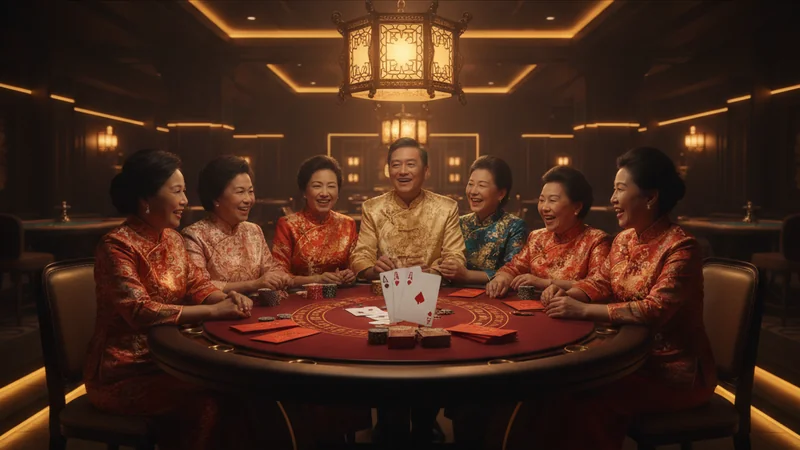
Ban Luck is Malaysia's best-loved home-grown card game, a local cousin of classic 21/Blackjack that has been dealt at kampung gatherings, Chinese New Year reunions and casino tables across the country for generations. In Malaysian lobbies it runs through the Asian live-casino studios, keeping the familiar race-to-21 framework intact while layering on the home-rule quirks, the shifting ace, the Ban Luck instant win, the banker taking ties and the five-card trick, that give the Malaysian game a personality all of its own. For anyone who grew up playing it socially, the live version feels instantly familiar.
What is Ban Luck?
Ban Luck (also called "Ban-Ban" or "21 points") is a card game where players compete to reach a hand value as close to 21 as possible without exceeding it. Unlike standard blackjack, Ban Luck is typically played without a dedicated dealer hand in home games, but live casino versions usually have a banker/dealer position against which all players compete.
Key Rules of Ban Luck
- Card values. Number cards count their face value and jacks, queens and kings count ten, exactly as in blackjack. The ace is where Ban Luck departs, because its value depends on how many cards you are holding rather than on what you choose.
- The shifting ace. Holding two cards, an ace counts ten or eleven. Holding three, it counts one or ten. Holding four or more, it counts one only. This single rule is the reason blackjack instinct misfires here, and it is the first thing to check in the table rules panel because a minority of tables handle it differently.
- Ban Luck. An ace paired with any ten-value card on the first two cards is a natural, settles immediately, and commonly pays 2:1 rather than blackjack's 3:2.
- Ban Ban. A pair of aces on the first two cards is the strongest hand in the game and commonly pays 3:1, settling instantly like a Ban Luck.
- Five-card trick. Reaching a total of 21 or less with exactly five cards wins regardless of the banker's total, and typically pays 2:1. Tables that recognise longer runs pay more for six cards and more again for seven, so read the panel for the exact ladder.
- Banker takes ties. Match the banker's total and you lose your stake rather than pushing, which is the opposite of standard blackjack and the rule that most often surprises crossover players.
- Minimum standing total. Most implementations require the player to reach a floor, commonly fifteen or sixteen, before standing is allowed. The exact floor is set by the table, so confirm it before you plan a low-total stand.
Strategy for Ban Luck
Tip 1: Learn the Ace Before Anything Else
The shifting ace is the rule that separates a comfortable Ban Luck player from a blackjack player losing money in an unfamiliar game. Ace plus six is seventeen on two cards. Draw a third card and that same ace may only be worth ten or one, so a hand you were happy to stand on can quietly become a hand you must improve. Work out your total after every card rather than carrying forward the value you assigned at the start of the hand, because in Ban Luck the earlier valuation genuinely expires.
Tip 2: Chase the Five-Card Trick
The five-card trick, five cards totalling 21 or less, is one of the most rewarding outcomes in Ban Luck, and it is the rule that most changes how you draw. It typically pays 2:1 and wins regardless of what the banker holds, which means a marginal hit on four cards carries bonus equity that a blackjack chart cannot see. Reaching a soft total on four cards is exactly the situation where Ban Luck rewards the draw that blackjack would tell you to refuse, because you are no longer only trying to beat the banker, you are also one card from a hand that beats everything.
Tip 3: Respect the Banker's Tie Advantage
Remember that in Ban Luck a tie usually goes to the banker rather than pushing as it would in standard blackjack, so a borderline hand that "draws" still loses your stake when the dealer holds the bank. Factor this in before standing on a marginal total: you generally need to genuinely beat the banker, not merely match them, which makes hitting one more card on a soft total often the smarter call.
Tip 4: Price the Payouts Before You Compare Games
Ban Luck's headline payouts are better than blackjack's, and the rule details claw a good deal of that back, so the honest comparison needs both halves. On a MYR 50 stake, a Ban Luck paying 2:1 returns MYR 100 profit where a blackjack natural at 3:2 would return MYR 75. A Ban Ban at 3:1 returns MYR 150. Those are real, and they are why the game feels generous.
Against that, the banker takes ties instead of pushing. In blackjack roughly eight to nine per cent of hands end in a push depending on the ruleset, and every one of those becomes a loss here. On a MYR 50 flat stake across a hundred hands, converting even eight pushes into losses costs MYR 400 of equity, which is a great deal more than the extra MYR 25 you collect on the occasional natural. Add the minimum standing total, which forces you to draw on hands blackjack would let you sit on, and the picture is a game priced roughly in blackjack's neighbourhood rather than a bargain.
Whatever the table's exact numbers, decide the session budget in Ringgit before the first hand and treat the special payouts as variance rather than income. Deposit limits, time-outs and Malaysian support services are set out on our responsible gambling page, and Ban Luck's festive-season surge is precisely when they are worth setting.
Which Providers Offer Ban Luck
Ban Luck is a regional speciality rather than an international flagship, so it lives with the Asian-focused studios rather than the big European suppliers. These are the providers in Malaysian lobbies whose catalogues cover local 21-family tables:
- PlayAce. Builds specifically for Southeast Asian players and carries the local card game formats that international studios skip.
- Game Play. Runs a broad Asian table game catalogue across several stake bands, which is where regional 21 variants usually sit.
- SA Gaming. An Asian specialist widely carried in Malaysian lobbies, with a table mix aimed at Malaysian and Southeast Asian players.
Individual table availability is set by the operator, not the studio, and it moves. If Ban Luck matters to you, filter the lobby by provider and check the table list before depositing, and see our live casino providers page for who supplies what.
The Home Rules That Make It Malaysian
Ban Luck's personality lives in the rules no international blackjack table would recognise. The instant hands settle immediately, an ace with a ten-value card as Ban Luck paying double, a pair of aces as Ban Ban paying treble on most tables, both honoured before ordinary play continues. The five-card trick rewards surviving to five cards without busting, paying double on most implementations, with escalating rewards where tables honour the rarer six and seven card runs. And face cards carry their familiar ten while the ace shifts between eleven, ten and one depending on how many cards you hold, a detail that reshapes drawing decisions in ways classic blackjack instinct will not predict. The casino version standardises what every kampung table argued about, which is half the charm lost and half the fairness gained.
What Transfers From Blackjack, and What Misleads
The race-to-21 skeleton means blackjack players sit down comfortable, and the comfort deserves an asterisk. Basic strategy charts are built for blackjack's exact payout and drawing structure, and Ban Luck's special hands, shifting ace and five-card bonus bend the mathematics away from the chart in places. The five-card trick in particular rewards drawing lines the chart would never choose, since a marginal hit carries bonus equity the chart cannot see. The honest approach is blackjack discipline, stand on strength, respect the dealer's range, without blackjack dogma, and a few observed shoes at minimum stakes teach the local grammar faster than any translation.
A Game That Came Home
For a generation of Malaysians the game was never a casino product at all, it was reunion-dinner furniture, dealt by whoever held the bank and remembered the house rules loudest. The live studio version completes an odd migration, the family game professionalised and streamed back into the living rooms it came from, and its audience across Malaysian lobbies skews exactly as you would guess, heaviest across the festive season when the original version is being dealt three sofas away. Played alongside classic blackjack, it makes a fine study in how one game idea grows different accents oceans apart.
The Dealer's Turn, and Why It Feels Different Here
One structural quirk separates the casino version from most 21-family games, the drama of the dealer's resolution. Because Ban Luck's special hands settle instantly and the five-card rule hangs over every long draw, the dealer's turn carries suspense blackjack rarely matches, a dealer sitting on four cards is one draw from paying the table double, and the room knows it. The studio version stages this properly, the dealer's hand resolving card by card with the settlement consequences displayed as they change, and it is genuinely the best moment of the format, the home game's noisy climax professionally lit.
For Malaysian players the table also carries something subtler, the small pride of a local game running alongside the international catalogue, dealt with the same production values as the Evolution flagships. The kampung game made it to the big room, and it plays there exactly as well as everyone always said it would.
Related Reading
- PlayAce for the studio profile behind most of the Southeast Asian card game tables in a Malaysian lobby.
- Classic Blackjack is the international cousin, and the right table to compare Ban Luck's payouts and tie rule against.
- Pok Deng is the Thai member of the same fast local card game family, with its own scoring quirks.
- Three Card Poker for another short-hand table game that resolves in a single decision.
- How to play live blackjack in Malaysia covers the baseline rules and drawing logic that Ban Luck bends.
Common Questions
Does the dealer play by fixed rules here?
Yes, the studio version fixes the dealer's drawing policy and settlement order, published in the rules panel. The home game's discretionary dealer moments are the main thing standardisation retired.
Is Ban Luck better or worse value than blackjack?
The special payouts give and the rule details take, and the net depends on your table's exact implementation. Read the panel, and expect the neighbourhood of blackjack's price rather than a bargain or a trap.
Can I use a blackjack strategy chart?
As a starting skeleton, yes. Trust it least around five-card situations and ace handling, where Ban Luck's rules diverge hardest from the chart's assumptions.
Does Ban Luck run all year or only at festival time?
The studio tables deal year round, with the predictable festive surge when the whole country remembers the game at once. Off-season sessions get the same production at calmer tables, and for anyone learning the casino version's standardised rules, the quiet months are honestly the better classroom.