Heads Up Hold'em Malaysia – Evolution One-on-One Poker Guide
No other players to read, no bluffs to sell, just you, a dealer bound to a fixed rule, and three bet decisions that settle the whole hand. Heads Up Hold'em by Evolution Gaming distils the tension of one-on-one Texas Hold'em into that streamlined live casino duel at most Malaysian live casinos, weighing every Ante, Blind and Play decision on your own rather than against a table of opponents. Poker fans who want the read-and-raise drama of Hold'em without bluffing other humans will find it the closest a house-banked game gets to a genuine heads-up showdown, provided they already know hand rankings and want the format's specifics rather than a beginner's tutorial. What follows covers how the Ante, Blind and Play bets interact, why raise sizing early is where almost all of the skill lives, and how the dealer qualification rule quietly changes what a marginal hand is worth.
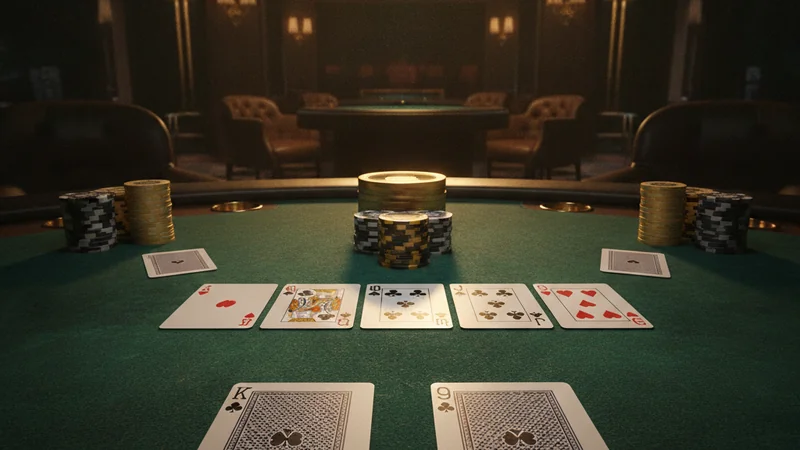
What is Heads Up Hold'em?
Heads Up Hold'em from Evolution Gaming is a live dealer poker game where you compete directly against the dealer in a one-on-one Texas Hold'em format. Both sides receive two hole cards, five community cards are shared, and the best five-card hand takes the pot. The dealer plays to a fixed rule rather than to a read, and needs a pair of fours or better to qualify, which is the single rule that most changes how you should treat a marginal hand. The rules and paytables quoted on this page come from the provider's published game rules and the information panel on the live table, held to the standard set out in our live casino review methodology.
How to Play
- Place Ante bet. Initial wager to join the hand.
- Blind bet. Equal to Ante, pays enhanced odds for Straight or better.
- Trips bet (optional). Side bet paying for Three of a Kind or better.
- Cards dealt. Player and dealer receive 2 hole cards; 3 community cards dealt face-up.
- Bet or Check. Decide to make a Play bet (2-3x Ante) or check. Turn and River then complete the board.
Strategy
Tip 1: Bet with Any Pair on the Flop
If you have any pair using your hole cards or the community cards after the flop, always place the maximum Play bet. The pot odds justify the raise in virtually all paired situations.
Tip 2: Trips Side Bet Value
The Trips side bet in Heads Up Hold'em pays 3:1 for Three of a Kind up to 100:1 for a Royal Flush depending on the pay table. Check the specific table's Trips pay table before committing regularly to this side bet.
Tip 3: Never Fold a Made Hand on the River
One mistake unique to this format is folding a marginal pair before the river when checking through costs nothing. Because the dealer needs a pair of fours or better to qualify, even a modest pair reaches showdown as a live hand far more often than instinct suggests. When in doubt on a paired board, put in the 1x Play bet on the river rather than surrendering the Ante and Blind you have already committed.
Which Providers Offer It
- Evolution Gaming deals Heads Up Hold'em exclusively from its own poker studios, so a Malaysian lobby without Evolution will not carry it. Playtech and a handful of Asian-facing studios run their own house-banked poker tables, but under different names and with different qualification rules, so read the paytable rather than assuming the strategy transfers.
The Decisions That Actually Move Your Result
House-banked poker gives you a handful of true decision points per hand, and this format concentrates almost all of its skill into the first one. Strong starting hands want the maximum raise at the earliest opportunity, because early raises put the most money behind your best situations. Pairs, big aces and strong broadway cards should never limp along at the minimum. The discipline that separates profitable play from donation is raising big early with the top of your range and checking everything marginal through to a cheaper street, rather than paying mid-sized raises with mid-strength hands, which is the format's most common leak.
Why the Blind Bet Thinks Differently
The Blind wager confuses new players because it sits on the table doing nothing on most winning hands. That is by design. It pays only when your winning hand reaches a straight or better, and those occasional premium payouts are funded by all the hands where it pushes. Read it as a built-in volatility trade. Part of your ordinary win rate is being exchanged for occasional spikes. Once you see it that way, the Blind stops feeling like a tax and starts reading as the game's character.
Dealer Qualification Cuts Both Ways
The dealer needing a minimum hand to qualify sounds like pure player protection, and sometimes it is, returning bets that would have lost against a made hand. But it also caps your payout on hands where you were far ahead of a dealer holding nothing. The practical lesson is the one the strategy section above already points toward. Do not fold made hands late. Checked-through boards reach showdown cheaply, qualification refunds a share of your bad situations, and even modest pairs realise their equity more often than instinct suggests.
Where It Sits Among the Live Poker Tables
Casino Hold'em is the community-card sibling with a single post-flop decision, the easiest entry point of the family. Ultimate Texas Hold'em offers the richest decision tree and rewards study most heavily. Heads Up Hold'em sits between them, more texture than the former, less memorisation than the latter, and the strongest sense of an actual duel, since the whole presentation is built around you and the dealer facing off alone. Players who miss reading a human opponent should remember there is nothing to read here. The dealer's play is fixed by rule, which turns the game into pure strategy against a known policy, closer to solving a puzzle than playing poker psychology.
One Hand, Walked Through
You post the Ante and Blind at MYR 10 each and pick up ace-nine suited. It is a decent start but not a premium one, so the disciplined line is to check rather than commit the big raise, keeping the hand cheap while it is still a coin flip. The flop brings a nine with two undercards. Now you hold top pair, the situation the strategy section calls an automatic bet, and the Play wager goes in at the table's flop sizing. The turn and river blank out, the dealer turns over king-high, and the hand resolves three ways at once. Your Play and Ante bets win. The Blind pushes, because top pair is short of the straight it needs to pay. And the dealer's king-high fails to qualify, which on this board affects nothing but on a losing board would have softened the damage.
One unremarkable hand, and yet it exercises every rule that matters, the early discipline, the paired-board raise, the Blind's silence on ordinary wins, and qualification working quietly in the background. Play fifty hands with that walkthrough in mind and the format stops feeling like rules and starts feeling like rhythm.
Bankroll and Related Guides
House-banked poker eats a bankroll faster than its stakes suggest, because a single hand can carry an Ante, a Blind, a Trips side bet and a Play raise of two or three times the Ante. Budget by the round rather than by the bet. At MYR 10 Ante and Blind, a committed hand can put MYR 50 or more on the felt, so a MYR 500 session is ten to fifteen full hands rather than fifty. Decide that number before you sit, and if you find yourself raising to recover a bad run, the deposit limits and time-out tools on our responsible gambling page are the correct response.
Our Evolution Gaming page covers the studio's full poker range. Players who enjoy the study should compare Ultimate Texas Hold'em for its richer decision tree, while Casino Hold'em is the simplest way into the family, and our live poker guide for Malaysia sets the house-banked formats side by side so you can pick the right one.
Common Questions
Is this real heads-up poker?
It is heads-up in structure, one player's hand against the dealer's, but there is no bluffing and no fold equity because the dealer follows fixed rules. Your edge comes entirely from correct raise sizing and disciplined showdowns.
Should I always take the Trips side bet?
No. It is a separate wager with its own price, worth a small fixed allocation if you enjoy the sweat, and its paytable varies between tables, so check it before making the bet a habit.
What single habit improves results fastest?
Raising the maximum with premium starting hands instead of flat playing them. Nearly everything else in the format is damage control. That decision is where the value lives.
Is there a seat limit or waiting time?
No. Like most Evolution poker formats the game deals unlimited hands in parallel, every player facing the same dealer cards with their own hole cards, so there is never a queue for a seat and never pressure to act faster because someone is waiting behind you.