Three Face Baccarat Malaysia – Special Face Card Variant Guide
Three Face Baccarat is a distinctive Asian live casino card game you can find at most Malaysian live casinos. Where ordinary baccarat treats every face card (J, Q, K) as a flat zero, this variant flips that convention on its head by giving Jacks, Queens and Kings their own point values tied to the number of face symbols printed on each card. The result is a fresh scoring layer on top of familiar baccarat mechanics, one that quietly favours players who take the time to learn the values rather than relying on standard-baccarat instincts. If you already play baccarat comfortably and want to know whether this table is worth a shoe of your time, this page gives you the scoring change, the three checks to make in the rules panel before your first bet, and a sense of what the learning curve costs at Malaysian table minimums.
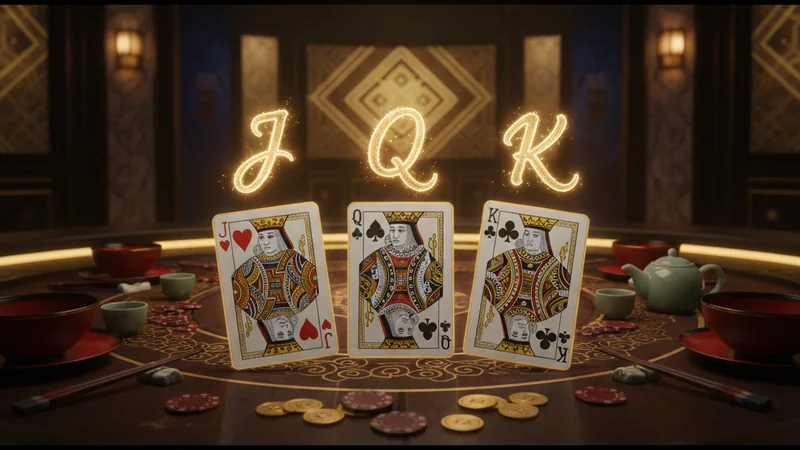
What is Three Face Baccarat?
Three Face Baccarat is an Asian variant in which Jacks, Queens and Kings carry point values instead of counting as zero, with the values keyed to the face imagery on the card. In the most common implementation a Jack counts as 1, a Queen as 2 and a King as 3, while every other card scores exactly as it does in the classic game. That single change ripples through hand totals, because roughly a quarter of the deck stops being worthless.
Where These Figures Come From
The scoring, drawing and payout details on this page come from the table rules panels of the studios that run scoring variants, checked against live Malaysian lobbies under our review methodology. This is a family of variants rather than a single standardised game, so wherever an implementation genuinely differs between studios we say so and send you to the panel instead of presenting one version as the rule.
Key Rule Differences
- Face card values. J=1, Q=2, K=3 in most Three Face variants (check specific table rules).
- Hand calculation. Same last-digit rule as standard baccarat, only the final digit of the hand total counts.
- Betting options. Player, Banker, and Tie remain the core bets.
- Drawing rules. Third card drawing rules may differ from standard baccarat due to changed card values, refer to the table's specific rules.
- Payouts. Standard baccarat payout structure applies in most versions.
Strategy Tips
Tip 1: Study the Face Card Values First
Unlike standard baccarat where face cards are simply zero, Three Face Baccarat requires you to memorise the specific face card values at your table. These can vary between providers and tables. Always read the rules panel before your first bet.
Tip 2: Recalculate Your Intuition
Experienced baccarat players often have intuitive reads on hand probabilities. Three Face Baccarat changes those probabilities, take time to recalibrate before betting heavily.
Tip 3: Confirm Whether Drawing Rules Shifted
Because Jacks, Queens and Kings now carry real point values, the third-card drawing logic at some tables behaves differently from the version you know. Open the rules panel and confirm exactly when a third card is drawn for Player and Banker before you raise your stake, this single check prevents costly assumptions on borderline totals.
Which Providers Offer It
Scoring variants are an Asian-studio speciality, so the tables that carry them in Malaysian lobbies come from providers built for this audience rather than from the large Western studios.
- Allbet. Builds its live catalogue around Asian card game variants and is one of the studios Malaysian lobbies turn to for rescored baccarat tables.
- SA Gaming. Runs a wide specialty baccarat range alongside its classic tables, with its own presentation and side bet menu.
Because the variant is not standardised, the same title from two studios can use different face values or a different commission rule. Read the panel of the specific table rather than trusting the name above it.
Learning the Face Values Until They Are Boring
The variant's entire skill component is a memory task, and it is smaller than it first looks. Jacks carry one, Queens two, Kings three, and every other card scores exactly as classic baccarat taught you. The trap is not the values themselves but the reflexes underneath them, because a decade of casino habit reads face cards as zero without consulting you. The fix is rehearsal at stakes that do not matter, a few shoes at the table minimum spent doing nothing but re-totalling hands until a King in the Player hand stops feeling like a blank. Most players report the reflex flips within a single evening, and from then on the variant plays as naturally as the classic game.
What the New Values Do to Hand Totals
Shifting a third of the deck from zero to positive values changes the texture of totals in ways worth noticing. Hands drift higher on average, the distribution of naturals moves, and combinations that were impossible in classic baccarat, a King and a six arriving at nine, become routine. None of this hands the player an edge, since the paytable is built around the variant's own mathematics, but it does mean classic instincts about which totals feel strong need recalibrating. The variant rewards players who watch a few dozen hands with fresh eyes rather than importing assumptions, which is, quietly, a good discipline at any unfamiliar table.
The Checks That Matter at Any Scoring Variant
A table that rescores cards deserves the full rules-panel treatment before real stakes. Confirm the exact face values in use, since implementations differ in detail across studios. Confirm the Banker payout structure and whether commission applies. And read the side-bet menu with particular care, because scoring variants often carry bespoke side bets built on their own mechanics, priced with the generosity side bets are famous for. Five minutes of reading converts the table from a novelty gamble into a known game, and the habit transfers to every variant table on the floor, as our baccarat fundamentals guide keeps insisting for good reason.
The Variant as a Window Into Baccarat Itself
Spend an evening here and something useful happens to your understanding of the parent game. Classic baccarat's face-cards-as-zero rule stops feeling like nature and starts feeling like what it is, one design choice among possible ones, with consequences that ripple through every drawing rule and payout. The variant makes those consequences visible by moving them around, higher average totals, redistributed naturals, a different rhythm to how hands complete. Players consistently report returning to classic tables with sharper attention after time at a scoring variant, the way travel sharpens the sense of home.
That framing also suggests the right stake level for the visit. This is a table for interested money rather than serious money, stakes set where the tuition is cheap and the attention stays on how the game behaves. The players who lose meaningfully at scoring variants are almost always the ones who staked it like their home game before the new values had settled into reflex, which is the one mistake this page can actually prevent.
What the Learning Shoe Costs in Ringgit
The useful thing about this variant is that the tuition is cheap and you can price it in advance. A live baccarat shoe runs around 60 to 70 hands, and a scoring-variant table in a Malaysian lobby will usually take bets from somewhere around MYR 5 to MYR 10 at the minimum, with the high end reserved for the peak-hours tables.
Sit at MYR 5 flat for one shoe and you have staked roughly MYR 325 across 65 hands. Banker in classic baccarat carries a house edge near 1.06 per cent and Player near 1.24 per cent, so if the variant is priced in that neighbourhood the whole learning shoe costs you somewhere around MYR 4 in expectation. That is a genuinely small price for retraining a reflex, and it is the argument for doing the retraining deliberately rather than mid-session at a stake that matters.
What changes the arithmetic is the Tie bet and any bespoke side bets the variant carries. Tie in classic baccarat is commonly priced near 14 per cent at 8 to 1, which is more than ten times the Banker figure. A MYR 5 Tie on every hand of that same shoe adds MYR 325 of turnover at a price roughly ten times steeper, so the side action can cost several times what the main game does. Scoring variants often add their own face-card side bets on top, priced with the same generosity, and those are precisely the bets to leave alone until the panel has told you what they pay.
The mistake worth naming is staking this table at your usual baccarat level on the first visit. The values have not become reflex yet, the totals read strangely, and the hands where a King turns a blank into a nine are exactly the ones that catch a distracted player out. Drop a level for the first shoe, decide the session figure in Ringgit before you sit, and treat the visit as tuition. Deposit limits, session reminders and Malaysian support services are on our responsible gambling page if the stake starts drifting upward.
Related Reading
- SA Gaming for the studio catalogue where most Malaysian specialty baccarat tables originate.
- Classic baccarat is the parent game, and the one to be comfortable with before you rescore anything.
- No commission baccarat is the other common rule change, this time to the payout rather than the deck.
- How to play live baccarat in Malaysia covers the drawing rules the variant builds on.
- Bankroll management for live casino play is the practical companion to the learning-shoe arithmetic above.
Common Questions
Does the face-card scoring favour the house more than classic baccarat?
The variant's economics live in its paytable rather than the scoring itself, so the honest answer is table-specific. Assume classic-adjacent pricing only after the panel confirms it.
Is this a good first baccarat game?
No, learn the classic game first. The variant's pleasure is precisely in how it bends rules you already know, and without that foundation it is just baccarat with extra homework.
Why do Asian studios produce so many scoring variants?
Because their audiences are baccarat-literate to a depth Western markets rarely reach, and a rescored deck is genuine novelty for players who have seen ten thousand classic hands. The variants are conversation with an expert audience, which is also the right spirit to play them in.
Do the roads and scoreboards work the same here?
The displays track results identically, and they remain exactly as decorative as at every baccarat table. The variant changes how hands score, not whether past outcomes influence future ones, which they never have anywhere.
If the variant catches your interest, give it a full shoe before judging. The rescored deck reveals its character gradually, and most players who dismiss it did so inside ten hands, before a single King-led nine had shown them what the game is actually like to read. A shoe costs little at the minimums and settles the question properly.