First Person Mega Ball Malaysia – Solo Bingo Lottery RNG Guide
Buy two hundred Mega Ball cards in one round and the Ringgit adds up faster than the balls get drawn, at MYR 1 a card that is a MYR 200 wager decided in under a minute. This guide explains how the draw is structured, why buying more cards changes your variance and not your value, what a twenty-card round prices out at in Ringgit, and when the solo format beats the live show.
First Person Mega Ball offers Malaysian players a solo, self-paced version of Evolution Gaming's wildly popular Mega Ball lottery-bingo hybrid game, available wherever a Malaysian lobby carries the Evolution suite. Play at your own tempo with full RNG results, then hit the Go Live button to join the live Mega Ball show with real hosts and other players whenever you feel ready.
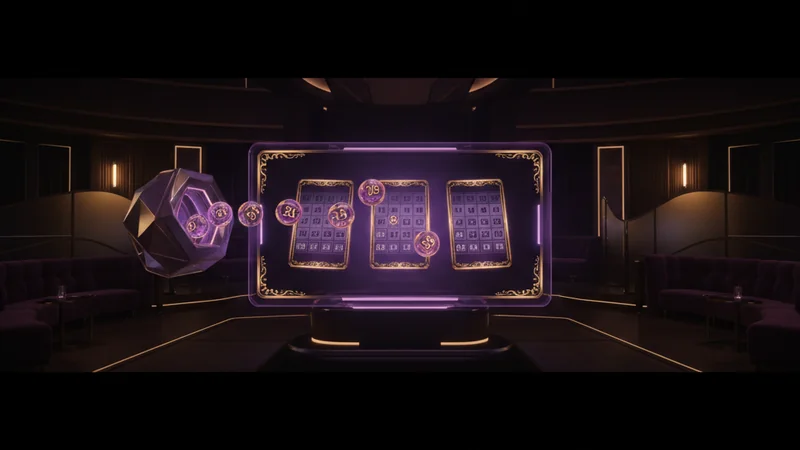
What is First Person Mega Ball?
First Person Mega Ball from Evolution Gaming is the self-paced, RNG-driven counterpart to the live Mega Ball show. You buy cards printed with randomised number grids, then a sequence of numbered balls is drawn one after another; complete any line across a card and it pays out. The real fireworks come from the Mega Ball itself, when it is drawn, a randomly assigned multiplier of between 5x and 100x is slapped onto every line that ball completes, turning an ordinary round into a potential windfall in a single moment.
How to Play
- Purchase cards. Buy between 1 and 200 cards for the round. Each card is a five by five grid filled with random numbers drawn from a pool of 51, and each one is charged separately.
- Balls drawn. Twenty balls are drawn one at a time from that pool of 51, and your cards daub themselves automatically as the numbers land.
- Lines complete. Every completed line on every card pays, and a single card can complete several lines in one round.
- Mega Ball. A final ball, the Mega Ball, is drawn from the remaining numbers and carries a randomly assigned multiplier of between 5x and 100x. Any line that this last ball completes is paid at that multiplier.
- Collect winnings. Ordinary lines pay at the standard rate, and Mega Ball lines pay the multiplied amount. Everything settles automatically before the next round.
The structure of the draw, the card format and the multiplier range are Evolution Gaming's published game rules and are repeated in the table's own info panel, which also states the return for the version you are playing. That panel is the authority, not a general guide like this one. Our approach to checking game facts against provider documentation is set out in our live casino review methodology.
What a Round Costs in Ringgit
Card price times card count is the only number that matters, and it is the one the interface makes easiest to lose track of. At a MYR 1 card price, twenty cards is a MYR 20 round, fifty cards is a MYR 50 round, and the 200-card ceiling is a MYR 200 round. That charge lands whether or not the Mega Ball helps you, and a self-paced round takes well under a minute, so a distracted half hour at fifty cards is a MYR 1,500 evening rather than the MYR 50 the slider suggested.
Decide the per-round figure before you open the game and hold the card count fixed for the session. If MYR 20 a round is your number, that is twenty cards at a MYR 1 price and it stays twenty cards after a near miss. Our responsible gambling page covers the deposit limits and session timers that enforce this when a run of close cards makes the slider tempting.
Strategy Tips
Tip 1: More Cards Means Smoother, Not Better
Buying more cards raises the chance that some line completes and that the Mega Ball catches one of them, but it raises your stake in exactly the same proportion, so the expected return per Ringgit does not move. What extra cards buy is consistency: fewer completely blank rounds, and smaller swings in both directions. Ten to twenty cards is a sensible starting range for most bankrolls because it is enough for lines to complete regularly without the per-round cost climbing out of view.
Tip 2: Go Live for the Full Experience
The live Mega Ball show adds social excitement, live presenter energy, and the shared experience of watching Mega Ball drawn. Once familiar with the game, the Go Live transition enhances entertainment significantly.
Tip 3: Size Your Card Count to Your Per-Round Budget
Remember that every card you buy is charged individually, so a round of 50 cards costs fifty times a single card's price, and the bill is the same whether or not the Mega Ball lands. Decide on a fixed spend per round first, then divide it by the card price to set your card count, rather than buying near the 200-card ceiling and burning through your balance in only a few draws.
Which Providers Offer It
- Evolution Gaming, Creator of First Person Mega Ball with Go Live transition to the live show.
Card Count Is Your Volatility Dial
The single most consequential choice in Mega Ball happens before any ball drops. One card is a lottery ticket, cheap and wildly volatile. Two hundred cards is close to buying the round's average outcome, smooth and unexciting, with the stake scaled to match. Most players find their comfort somewhere between ten and fifty, enough cards that lines complete regularly, few enough that a good round still feels like an event. There is no correct number, but there is a correct method, which is picking a count whose total cost per round fits your budget and holding it steady rather than doubling cards after a near miss.
The Mega Ball Moment
The round's drama is deliberately back-loaded. Twenty ordinary balls build lines quietly, and then the Mega Ball drops with its 5x to 100x multiplier and applies it to any line that final ball completes. Near misses are engineered to be frequent, cards sitting one number short as the last ball rises, and that manufactured tension is the game's signature. Enjoy it for what it is. The multiplier assignment is random, the final ball is random, and a session's result is decided by variance wearing a very entertaining costume.
Solo Pace, and the Door to the Live Show
As with every First Person title, the absence of a host means the absence of a brake. Rounds start when you start them, and a bingo format resolves quickly enough that card costs accumulate faster than they feel. A round cap set in advance is the honest fix. When you want the format at its best, the Go Live button leads to the full live Mega Ball show, where a host calls the balls, the pace relaxes, and the shared near-miss groan of a few hundred players is genuinely part of the fun. The RNG room is for learning the rhythm and testing card counts. The show is where the game earns its reputation.
What the Interface Does For You
The screen handles all the clerical work bingo used to demand. Cards daub themselves as balls drop, the interface continuously sorts your best-performing cards to the top of the view, and a running indicator shows how many numbers each leading card needs for its next line. That last detail is where the format's tension lives, and it is worth understanding what the display is really telling you. A card sitting one number short with five balls remaining is genuinely close in a countable way, and the interface surfaces that fact deliberately because near-misses are the emotional engine of every bingo derivative ever built.
Budgeting works cleanest in round-cost terms. Card price times card count is your true per-round stake, and the interface's ease of nudging the count upward is precisely where sessions drift. Twenty cards at MYR 1 is a MYR 20 round, respectable and controlled. Absent a decision, the same session a half hour later is often running fifty cards because the slider moved in optimistic increments after near misses. Fix the count and price before the first round, write the per-round figure somewhere visible if that helps, and the format becomes what it should be, an unhurried number-watching pleasure at a known price.
Common Questions
Are more cards a better deal?
No. Every card carries the same expected return. More cards buy smoothness, not value, and the right count is a comfort decision rather than a strategy one.
Can I pick my own card numbers?
Cards are generated randomly, and it would not help if they were not. Every grid faces the same draw, and no arrangement of numbers is luckier than another.
Is the RNG version's return the same as the live show?
The formats are built to the same mathematical model, with the same multiplier range on the final ball. Differences between tables, where they exist, live in the paytable panel rather than the format.
Do bonus funds work on Mega Ball?
Frequently not, or not at full value. Game show and bingo-style titles are among the categories most often excluded from bonus wagering, or counted at a fraction of stake, and this varies by operator rather than by studio. Check the promotion terms on the operator's own page before you claim a bonus you intend to spend here.
Is Mega Ball basically bingo?
Structurally yes, and the honesty helps rather than hurts it. The cards, lines and ball draws are bingo's machinery, modernised with auto-daubing and the multiplier finale. What the casino format adds is control over your card count and stake, and what it removes is the community hall's fixed pace. If a relative loved bingo nights, they will recognise this game instantly, and the recognisable machinery is precisely why it converts so many players who find card and wheel games abstract.
The format's final virtue is transparency. Every card's progress is visible, every payout traces to a line you can point at, and nothing about a round requires trust in anything you cannot see on screen. For a numbers game descended from the church hall, that visibility is a fittingly honest way to modernise, and it is a large part of why the Mega Ball family keeps converting players who never considered themselves bingo people.
Related Reading
- Evolution Gaming, the studio behind both Mega Ball formats and the source of its published rules.
- Mega Ball, the live show with a host calling the balls and a slower pace.
- First Person Dream Catcher, another solo RNG title with the same Go Live door.
- Live Keno, the closest number-draw alternative in a Malaysian lobby.
- Live Lottery, if the draw format rather than the bingo card is what appeals.
- Best live game shows in Malaysia, for how the category compares on pace and price.